
Pokémon GO
Niantic, Inc.Adventure
3.5997.40K Reviews
- Version
- 0.433.1
- Installs
- 500.00M
- Age Rating
- Everyone
Screenshots


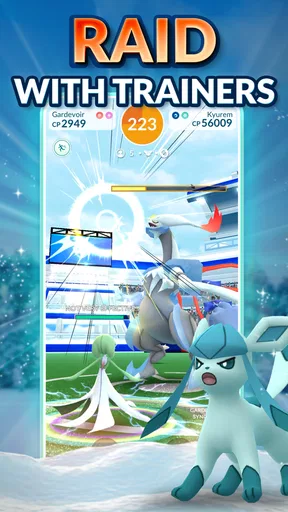


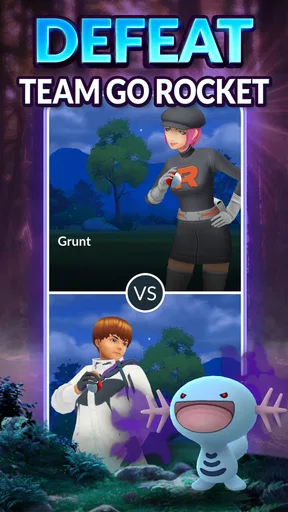
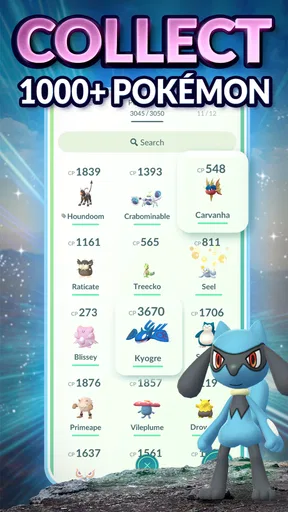
Our Review of Pokémon GO
 Analysis by Appyee
If you're anything like me, you've probably heard all the buzz about Pokémon GO and wondered what all the fuss is about. I decided to dive in and see what this app has to offer, and let me tell you, it’s been quite the adventure!
Who benefits from a world-sized playground?
I find this adventure works best for people who already have a reason to walk: a commute, a dog outing, a lunch break, or an errand through a neighborhood they know. The game gives those familiar routes a second purpose. Instead of opening a conventional mobile adventure and staying in one place, I’m looking around the street and deciding whether a stop is worth a short detour. That real-world connection is the point, but it also means the game is less convenient when the weather, schedule, or surroundings make walking unpleasant.
A realistic routine could be checking the game before leaving for a nearby shop, catching what appears along the way, and stopping briefly at an in-game location if it is safe and convenient. I wouldn’t plan a route around a screen while crossing roads or entering somewhere I don’t belong. The best habit is to check the phone while stationary, then put it away while moving through traffic or crowded areas. That small adjustment keeps the experience pleasant rather than turning an ordinary walk into a distracted one.
It is also a more convincing fit for someone who enjoys collecting and gradual discovery than for someone who wants a tightly scripted story. Compared with a standard location-free adventure, Pokémon GO makes the outside world part of the play space, which can make a familiar park feel newly interesting. The trade-off is that a location-based game asks for time outdoors and access to places where play is practical. If you want a game you can reliably enjoy on a short indoor break, a conventional puzzle or adventure title may suit you better.
Spending, progress, and pressure
The game is free to download, but it includes in-app purchases priced from $0.99 to $99.99 per item. I would treat that range as a reason to make a personal spending limit before browsing any purchase options, not as a promise that spending is needed to enjoy a walk or catch Pokémon. The verified purchase information establishes that optional items can be bought at those listed price points; it does not establish what each purchase contains or whether paying changes competitive outcomes. I would avoid assuming that a particular item is essential without checking its in-game description and deciding whether it matches how I actually play.
Progress here can feel uneven because the game’s pace is tied to where I go and when I choose to play. A person with a convenient route and time for regular walks may naturally have more chances to engage than someone who rarely leaves home. That is a practical access difference, not proof that either player is more skilled. I’d suggest treating collection as a long-running hobby rather than a checklist to finish quickly. If a limited-time activity makes an ordinary walk feel like an obligation, it is reasonable to skip it; the game should fit around your day, not take it over.
What fairness can—and cannot—tell me
Pokémon GO includes battles at Gyms and group raids, so there is a competitive and cooperative side beyond catching. In my view, the location-based structure is both its most distinctive strength and its clearest fairness question: players do not all have the same nearby places, free time, or opportunity to join others. That can affect convenience and participation even before purchases enter the picture. I would not equate access to more play opportunities with a guaranteed advantage, and I would not claim that paying creates one without reliable detail about the relevant purchase and mode.
If you mainly want a balanced head-to-head game where every match begins from a similar setup, a dedicated competitive game may be a better fit. Here, the appeal is broader: exploring, collecting, and sometimes coordinating with other people. I’d approach battles as one part of a mixed experience rather than the only reason to install it. For raids, it helps to make plans with people you already know or to check whether a group activity is convenient before setting out; the social element is rewarding, but it is not equally easy for every player to access.
Some practical details deserve a careful approach. I can say the game is free with purchases in the stated range, but I can’t responsibly infer which purchase is best, how much a particular player might spend, or whether a specific paid option changes the balance of a particular activity. Those answers depend on the item and mode, so I’d read the current in-game explanation rather than rely on broad claims. That uncertainty is a reason to buy cautiously, not a reason to assume either that spending is necessary or that it never matters.
The Thrill of the Hunt
First things first, Pokémon GO is all about catching those adorable little creatures we’ve all come to love. The app uses your phone's GPS to place Pokémon in the "real world." It’s like a treasure hunt where the treasures are digital monsters. You’ll find them in parks, on sidewalks, and even in your own backyard. The thrill of finding a rare Pokémon is genuinely exciting, and it gets you out and about, which is a huge plus in my book.
Gameplay Mechanics
The gameplay is pretty straightforward but surprisingly engaging. You walk around, and when a Pokémon pops up, you tap on it to start the catch sequence. Flicking Poké Balls on your screen to capture these creatures can be oddly satisfying. There are also PokéStops and Gyms, which add another layer of interactivity. PokéStops give you items like Poké Balls and potions, while Gyms are where you can battle your Pokémon against others. It’s simple enough for anyone to pick up, yet it offers depth for those who want to dive deeper.
One useful way to approach a new route is to pause at a safe spot and check what is nearby before choosing where to walk. I find that more enjoyable than repeatedly staring at the screen while moving. It also helps to separate the parts of play that suit a quick stop from those that need more time: catching can fit into a short break, while a group activity is easier when I can make a plan. This is a small workflow change, but it makes the game feel less demanding and helps me keep my attention on the actual place I’m visiting.
Augmented Reality and Social Interaction
One of the coolest features is the augmented reality (AR) mode, which makes it look like the Pokémon are right there in front of you. However, I found it a bit gimmicky and usually turn it off to save battery life. Speaking of battery, be prepared; this game can be a drain. On the social side, the game has evolved to include friend lists, trading, and even raids that require teamwork. It’s a fantastic way to meet fellow trainers and make new friends.
I’d think of AR as a novelty to use when I’m stationary and have a moment to enjoy it, rather than something I need to keep enabled. Turning it off is also a sensible choice when battery life matters or I simply want to catch something quickly. For social play, I’d start with a friend or a familiar group if that is available, especially for activities that call for teamwork. The game’s social tools can make shared play more engaging, but anyone who prefers to play entirely alone should know that some of its appeal comes from interacting with others.
Accessibility and Updates
Accessibility and updates are part of the game’s continuing appeal, with events and additions that give returning players new reasons to explore. I’d still be selective: a fresh activity is an invitation, not a requirement, and skipping one does not have to spoil the rest of the game. The app is rated for Everyone, is free to start, and is developed by Niantic, Inc. It has been available since July 6, 2016, and its current version is 0.391.1. It requires Android 9 or later, which is worth checking before downloading if you use an older Android device.
Its reach is substantial: it has more than 500 million installs, around 15 million ratings, and an average rating of 3.9, alongside roughly 996,000 written reviews. Those figures suggest a widely used game with plenty of mixed experience, not a guarantee that it will suit every player. I’d expect a better fit if you like Pokémon, enjoy outdoor walks, or have friends who already play. I’d be more cautious if you want a self-contained game that works the same way wherever you are, dislike location-based play, or need to conserve your phone battery during long days.
My verdict on trust and fit
All in all, Pokémon GO is more than just a game; it’s an experience that encourages exploration and social interaction. It’s easy to see why it became a global phenomenon. Whether you’re a die-hard Pokémon fan or just looking for a fun way to spend your afternoon, this app is definitely worth a try. Just remember to bring your charger along for the ride!
My recommendation comes with a practical boundary: try the free experience at a pace that suits your routine, keep purchases deliberate, and don’t let events or collection goals dictate where you go. The game is at its best when it adds a little curiosity to a walk you were happy to take anyway. If you want a location-free adventure, a predictable competitive setup, or a game that asks little of your battery and surroundings, another option will likely serve you better. For everyone else, this remains a distinctive way to turn an ordinary outing into a small hunt.
Privacy and Permissions
See what permissions an app requests and how it handles your data.
- Identity
- find accounts on the device
- Contacts
- find accounts on the device, read your contacts
- Location
- approximate location (network-based), precise location (GPS and network-based)
- Photos/Media/Files
- read the contents of your USB storage, modify or delete the contents of your USB storage
- Storage
- read the contents of your USB storage, modify or delete the contents of your USB storage
- Camera
- take pictures and videos
- Wi-Fi connection information
- view Wi-Fi connections
- Other
- view network connections, pair with Bluetooth devices, access Bluetooth settings, full network access, run at startup, use accounts on the device, control vibration, prevent device from sleeping
Verdict
Strengths of Pokémon GO
- Engaging augmented reality gameplay.
- Regular updates with new features.
- Encourages outdoor activity and exploration.
- Strong community and social interaction.
- Free to play with optional in-app purchases.
Limitations of Pokémon GO
- Drains battery quickly while playing.
- Requires constant internet connection.
- Limited gameplay in rural areas.
- In-app purchases can be expensive.
- Occasional server stability issues.
Similar Picks in This Category
View All
Roblox
Roblox Corporation4.2

Ninja warrior: legend of adven
TOH Games4.6

Ninja Arashi
Black Panther4.6

Eyes - The Horror Game
Fearless Games sp. j.4.5

Critical Action:Gun Strike Ops
FPS Shooter & Action Game4.3

Car Parking Games - Car Games
Frolics Simulation & Action Games4.3
You May Also Like
View All

Frequently Asked Questions
What devices are compatible with Pokémon GO?
Pokémon GO is compatible with most Android and iOS devices. For Android, you'll need version 6.0 or newer, and for iOS, version 12.0 or later. The game requires GPS and a stable internet connection. Ensure your device meets these specifications for optimal performance.
Is Pokémon GO free to play?
Yes, Pokémon GO is free to download and play. However, it offers in-app purchases that can enhance gameplay, such as Poké Balls, Incense, and other items. While the game can be enjoyed without spending money, some features and items may require purchases to access or speed up progress.
How does Pokémon GO use location services?
Pokémon GO uses your device's GPS to place you in an augmented reality world where you can catch Pokémon, visit PokéStops, and battle in Gyms. The game requires location services to be active, as your real-world movement is essential for in-game activities and progress.
Can I play Pokémon GO offline?
Pokémon GO requires an active internet connection to function. The game relies on real-time data to show Pokémon, PokéStops, and Gyms in your area. Without internet access, you won't be able to see or interact with these elements, making offline play impractical.
What are the safety concerns with playing Pokémon GO?
While Pokémon GO encourages physical activity and exploration, safety is important. Players should be aware of their surroundings and avoid dangerous areas. The game should not be played while driving or in any situation where it might distract from real-world hazards. The app includes safety warnings to remind players of these concerns.
Play our best games!


